- Pogledaj sve
- Highlights
- All
- Adaptation
- Mitigation
- Analysis
- Completed
- NC1
- NC2
- NC3
- NC4
- Project
- Report
- Strategy
The Republic of Serbia successfully presented the First Biennial Update Report (FBUR) to the UN Framework Convention on Climate Change during the 23rd session of the Conference of the Parties to the UN Framework Convention on Climate Change (COP23) during the Facilitative Sharing of Views workshop.
Namely, at the 2007 Conference, it was decided to introduce the principle of certain "checks" of the quality of the reports submitted by the Member States of the Convention, and at the Conference held in 2010 to include Biennial Updated Reports from developing countries, including the Republic Serbia. The official title of this process is the process of International Consultation and Analysis (hereinafter: ICA). Through ICA, in fact, the transparency of GHG emission reductions actions undertaken by the states is being enhanced, as well as the reports and contributions of their effects to global GHG emissions. In essence, the ICA's goal is identification of needs, in order to improve the quality of the following reports and actions to combat climate change.
The ICA process consists of two parts: technical analysis and sharing of experiences and information. The technical analysis of the report is carried out by the team of experts, endorsed by the Convention, while the exchange of experience and information is carried out at an event organized by the Convention during official meetings.
First Biennial Updated Report of the Republic of Serbia according to the Convention passed a technical analysis in 2016, while on the request of the Convention, the public presentation of the document, within the framework of the exchange of experiences and information under the ICA, was held on November 10, 2017.
The event was attended by member states of the UN Framework Convention on Climate Change, which, with the mediation of the Secretariat of the Convention, posted questions and commented on the aforementioned report of the Republic of Serbia. You can see the original video here:
The issues concerned both the modalities of collecting data for GHG emissions within the National inventory, as well as the mechanisms for checking the quality of these data, the institutional framework in the domain of climate change, and the establishment of a comprehensive monitoring, reporting and verification system. Questions were raised regarding specific activities that will contribute to emission reduction and emission reduction projections. In addition, the issues related to the importance of regional cooperation in the field of climate change are also raised.
Republic of Serbia successfully answered all the questions asked. The answers provide a set of measures and activities undertaken by the Serbian Government and the line ministry in order to improve the process of reporting and improving the quality of data contained in the GHG inventory prepared by the Serbian Environmental Protection Agency (SEPA) on an annual basis. Also, it was explained that institutional difficulties will be resolved when the new legal framework in the field of climate change comes into force, which is expected in 2018. Therefore, the basic prerequisite for the establishment of a comprehensive monitoring, reporting and verification system will be provided in accordance with the relevant EU legislation.
For presenting the First Biannual Updated Report according to the UN Framework Convention on Climate Change, the participants of the meeting received gratitude from the representatives of the USA, India and the Republic of Austria.
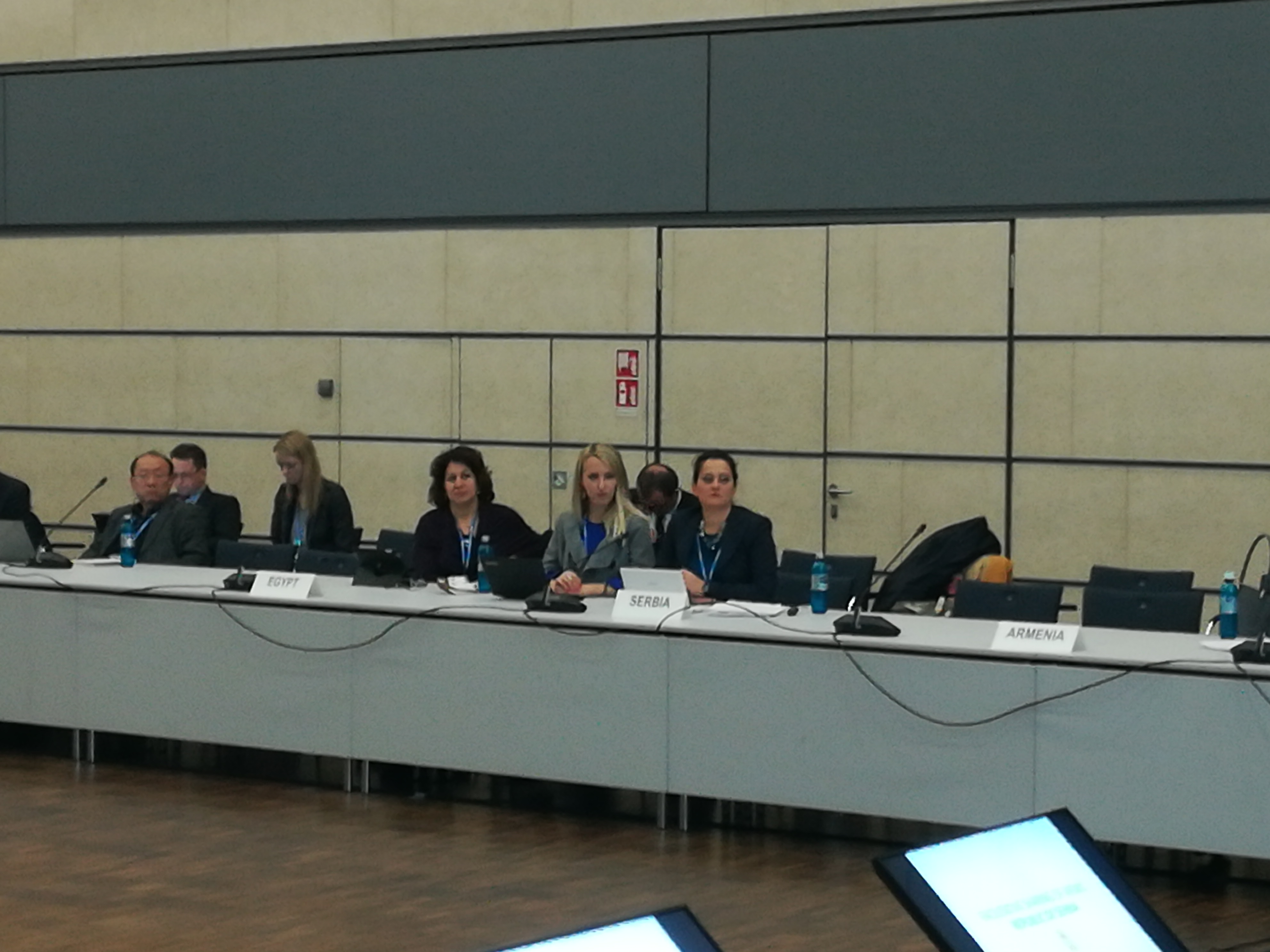
The Government of the Republic of Serbia adopted a decision on the establishment of the National Climate Change Committee at the meeting held on 20 November 2014, and appointed president of this body is Minister of Agriculture and Environment prof. Dr. Snezana Bosković-Bogosavljević.
The Committee will monitor development and implementation of national policies on climate change, sectoral policies and other planning documents, in terms of consistency with national climate change policies and propose measures for improving and coordinating policies, measures and actions in this field; monitor the fulfillment of international obligations of the Republic of Serbia in the field of climate change; propose measures to mitigate climate change, greenhouse gas emission reductions, and adaptation measures; discuss on amendments to laws and regulations relevant to climate change issues; propose actions to combat climate change; monitor implementation and propose measures to improve the National Strategy on Climate Change with accompanying Action Plan; and to mainstream climate change concerns into sectoral and national development priorities.
Members of the Committee are representatives of all relevant ministries and other governmental institutions, as well as representatives of universities and scientific institutions.
The inception meeting of the National Climate Change Committee held on 26 January 2014.
On the Inception meeting the Rules of Procedure of the National Climate Change Committee are proposed and adopted, the state of the preparation of Second National Communication and First Biennial Update Report are presented, as well as the identification of nationally determined contributions in reducing GHG emissions, and the state of the harmonization of national legislation with the relevant EU acquis, particularly the state of the establishment of the EU emissions trading system (EU ETS).