- Pogledaj sve
- Highlights
- All
- Adaptation
- Mitigation
- Analysis
- Completed
- NC1
- NC2
- NC3
- NC4
- Project
- Report
- Strategy
Due to the initial postponement of the conference in light of the COVID-19 pandemic, scheduled firstly for the November 2020, and after the consultations with the UNFCCC members and the international community, a new date has been set for the COP 26 which will be held in Glasgow from 1st to 12th November 2021. The host of the conference is the United Kingdom in partnership with Italy.
At the same time, the UNFCCC Secretariat and the Bureau called upon the member states to submit their revised and more ambitious Nationally Determined Contributions (NDCs) during this year. Although the meetings of the subsidiary organs of the Convention are so far postponed until October 2020, there will be a virtual meeting 1-10 June where the states parties and other stakeholders will have an opportunity to exchange and present the ways in which climate actions are advancing in these special conditions which the world is currently facing. Formal negotiations and decision making are not envisaged for this event and will be held at the meetings of the UNFCCC subsidiary organs in October of this year. More information available here: https://unfccc.int/news/governments-commit-to-take-forward-vital-work-to-tackle-climate-change-in-2020
And here https://unfccc.int/process-and-meetings/conferences/june-momentum-for-climate-change
Project “Advancing medium and long-term adaptation planning in the Republic of Serbia” aims is to strengthen national capacities to reduce the vulnerability and risk posed by climate change through the establishment of effective cooperation and coordination of all relevant institutions, as well as to identify measures for efficient adaptation to the changed climate conditions. The focus of the project is on the sectors of agriculture, forestry, water management, energy, transport and infrastructure. It is necessary to establish a system of information flow, to import all existing data within all sectors, and to make all data transparent and accessible. The main objective of the project is to provide a sustainable climate-resilient society and economy. The project is funded by the Green Climate Fund and implemented by the United Nations Development Program in cooperation with the Ministry of Agriculture, Forestry and Water Management.
In order to allow for the comprehensive and accurate collection of data and information required for the implementation of the project, a Working Group has been established. The Working Group has a total of 23 representatives from 15 institutions. Delegated members of the Working Group are representatives of the following institutions: Ministry of Agriculture, Forestry and Water Management, Serbian Chamber of Commerce, Statistical Office od the Republic of Serbia, FAO (Food and Agriculture Organization), Ministry of Construction, Transport and Infrastructure, Ministry of Environmental Protection, Republic Hydrometeorological Institute, Public Investment Management Office, Republic Geodetic Authority, Ministry of the Interior - Emergency Sector, Provincial Secretariat for Urban Planning and Environmental Protection, Ministry of Mining and Energy, Ministry of Health, Ministry of Finance, Ministry of Education, Science and Technological Development.
The kick-off meeting of the project “Advancing medium and long-term adaptation planning in the Republic of Serbia” was held on March 11, 2020 at the Metropol Hotel.
More information available here:
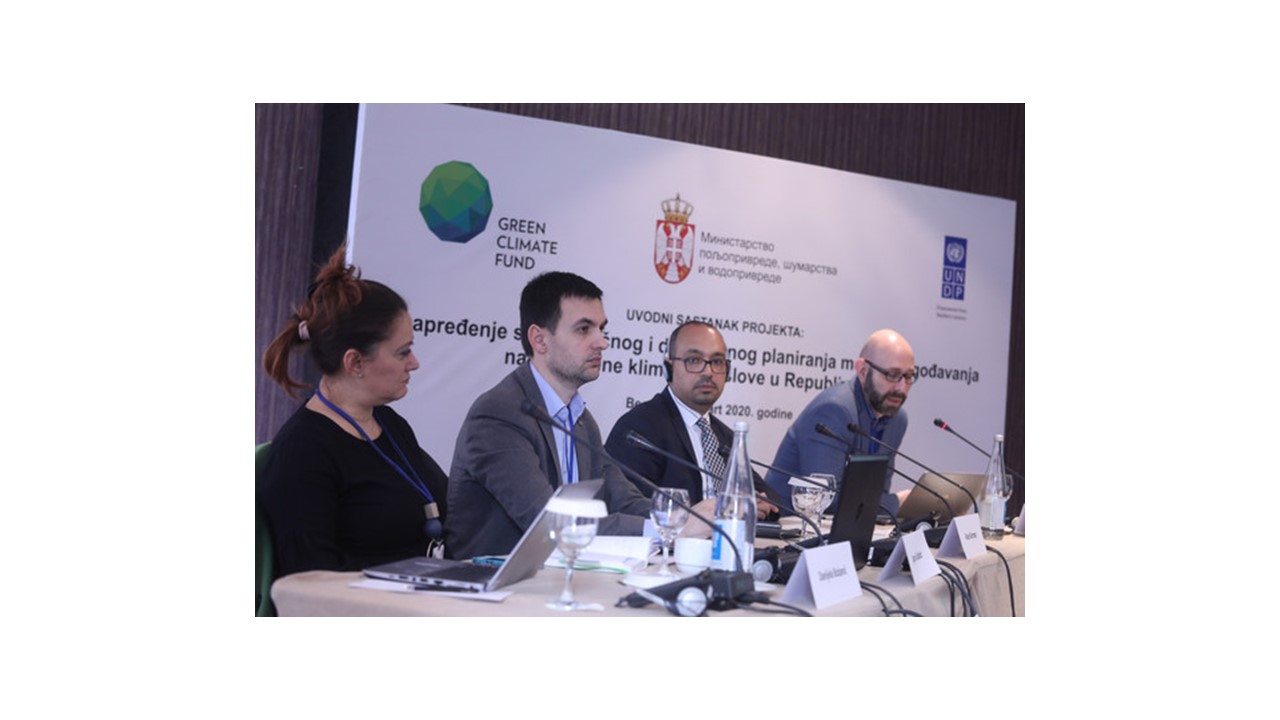
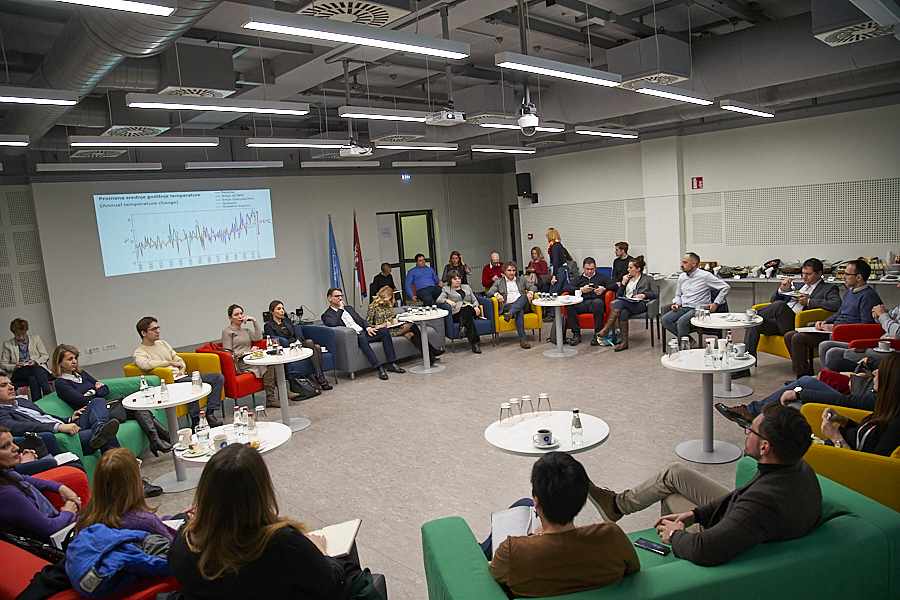
On Friday, December 27th, 2019 the UNDP in Serbia organized a meeting with representatives of the relevant national institutions which are providing their support when it comes to adaptation to changed climate conditions in Serbia through this project which will last for the next three years and will be funded by the Green Climate Fund.
The main goals of this project are to help the Government of the Republic of Serbia to:
- Develop and strengthen capacities to adapt to changed climate conditions (CCA);
- Conduct climate risk and vulnerability assessments;
- Develop effective methods, tools and informational systems for development of decisions on climate risks and sectorial adaptation measures.
The overall goal is to reduce the risk of climate change and to integrate the issues of adaptation to changed climate conditions into development planning and financing.
Beside this project inception meeting, a presentation on potential sources of financing the struggle against the climate change as well as the financing of the green projects and investments in overall was held. Discussion was focused around the existing and potential new mechanisms of financing the climate and green projects and all this in the context of accessing the global financing instruments such as the Green Climate Fund and “green credit lines” of the international finance institutions. Participants were given the opportunity to hear more about the new “Green deal” of the European Commission, a program document which puts the European development and fiscal policies in the center of the fight against the climate change, as well as about the circular economy and protection of the nature and the environment as a whole.
Professor Vladimir Djurdjevic from the Faculty of Physics of the University of Belgrade spoke about the main challenges when it comes to adaptation to climate change in Serbia with conclusion that the biggest losses will be caused by floods, droughts, high temperatures and wild fires. He said that in the period of 1890 and 1970 in overall 13 dry years were recorded while the same figure is observed for the period of 1970 to 2010, a fact which says that the number of dry years is doubled since the initiation of temperature measurements in Serbia.
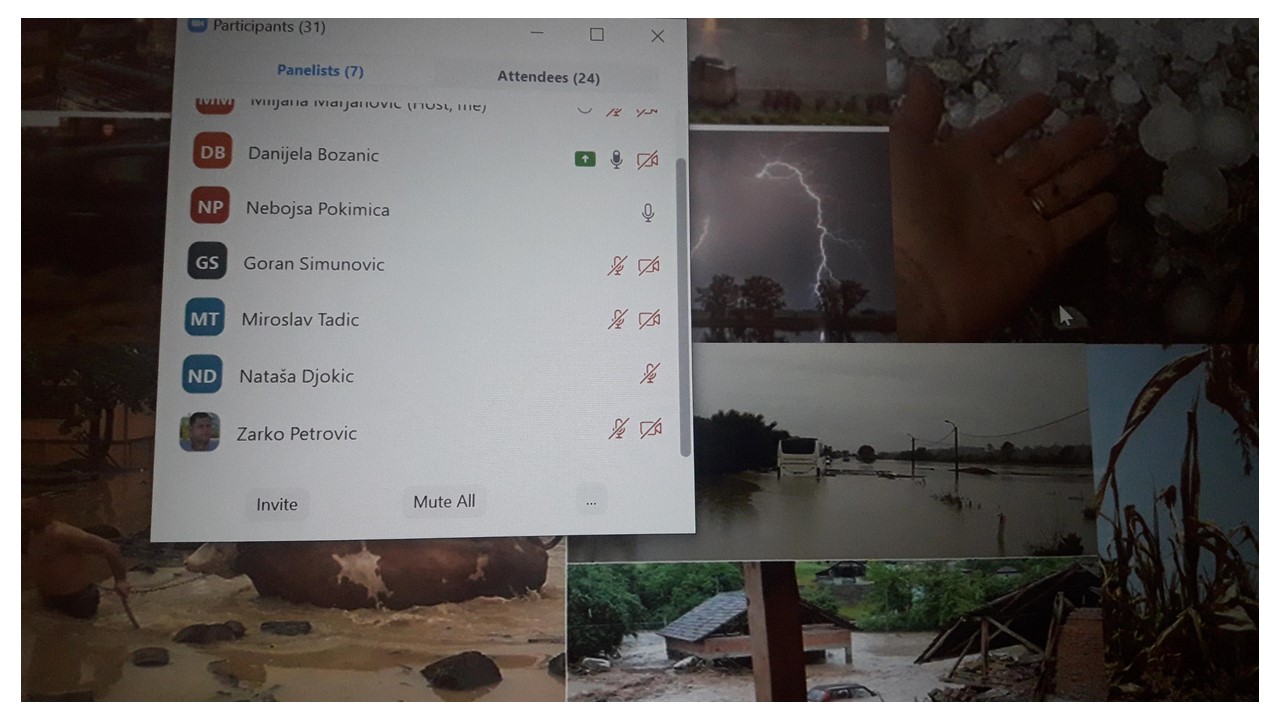
Ms. Danijela Bozanic from the Climate Change Consulting presented the projected GDP losses and potential job losses in certain areas which are caused and could be affected by climate change. She spoke about the sectors in the economy that will be hit by the climate change the most. Among these are: health care, agriculture, energy sector but also the overall loss in workers productivity, availability of drinking water and crop yields. These are the factors which will have the biggest influence on the state budget, which will need to secure the adequate answers to changed climate conditions. When it comes to GDP, in case that no adaptation measures are implemented and average temperature raises to 2⁰C, the GDP could be reduced for 4.53% in the period 2020-2040 or even by 9.32% by 2100. The point was put on the overall social transformation towards the direction of climate/carbon neutrality and planning for the changed climate conditions, which means putting the focus on urgent investments in the area of preventive measures rather than on taking care of the consequences.